V-Ups: Video Tutorial & Exercise Guide

| Workout | V-Ups |
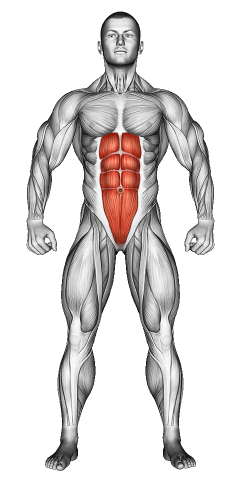
| Primary Muscle Group | Abs |
| Equipment Required | Mat |
| Force Type | Bodyweight |
| Mechanics | Isolation |
| Exercise Type | Core Strength |
| Difficulty | Intermediate |
V-Ups: Video Tutorial & Exercise Guide
V-Ups: Step-by-Step Guide
- Step 1: Lie flat on your back on the mat. Extend your arms straight over your head and keep your legs fully extended. Engage your core to prepare for the movement.
- Step 2: Simultaneously lift your arms and legs toward each other, reaching your hands toward your toes. Aim to create a “V” shape with your body as you rise.
- Step 3: Keep your legs as straight as possible while you lift. Try to lift your upper back off the mat, bringing your hands as close to your toes as you can.
- Step 4: Squeeze your abs at the top, holding the V position for a second. Focus on keeping balance and engaging your core fully.
- Step 5: Lower your arms and legs back down with control, keeping your core tight to avoid arching your back.
- Step 6: Repeat for the desired number of reps, maintaining a steady rhythm and full control on each V-Up.
V-Ups: Overview
V-Ups are an intense core exercise that strengthens your upper and lower abs togClaude. This move challenges your core stability and engages your hip flexors, giving you a full core workout in one movement. V-Ups are perfect for anyone looking to build core strength and definition.
V-Ups: Benefits
V-Ups strengthen your entire core by working the upper abs, lower abs, and hip flexors. This exercise improves balance, coordination, and core stability. Adding V-Ups to your routine builds stronger, more defined abs and helps you gain better control over your core movements.
V-Ups: Pro Tips & Advanced Techniques
- Keep Your Core Tight: Engage your abs throughout the movement to protect your lower back and maximize core activation.
- Avoid Rushing: Move slowly and with control, especially as you lower back down. Controlled movements improve core strength.
- Modify if Needed: If V-Ups feel too challenging, try bending your knees slightly or lifting only one leg at a time.
- Breathe with Purpose: Exhale as you lift up, and inhale as you lower down. This rhythm keeps you steady and focused.
V-Ups: Progression Plan
Beginner
Intermediate
Advanced
V-Ups: Frequently Asked Questions (FAQs)
What muscles do V-Ups work?
+V-Ups primarily target the abdominals, especially the upper and lower abs, and also engage the hip flexors.
Can I add V-Ups to any workout?
+Yes! V-Ups work well in any core or ab-focused routine, adding a challenging move to build strength.
Will V-Ups help me build stronger abs?
+Absolutely. V-Ups engage the entire core, helping you build strength and definition in your abs.
How often should I do V-Ups?
+Include V-Ups in your workout 2-3 times a week, especially on core-focused days.
What mistakes should I avoid?
+Avoid arching your back or using momentum. Focus on keeping your core tight, moving with control, and lifting with your abs rather than swinging your arms or legs.