Cable V Bar Curls: Video Tutorial & Exercise Guide

| Workout | Cable V Bar Curls |
| Primary Muscle Group | Biceps |
| Secondary Muscle Group | Forearms |
| Equipment Required | Cable, V bar |
| Force Type | Pull |
| Mechanics | Isolation |
| Exercise Type | Strength |
| Difficulty | Beginner |
Cable V Bar Curls: Video Tutorial & Exercise Guide
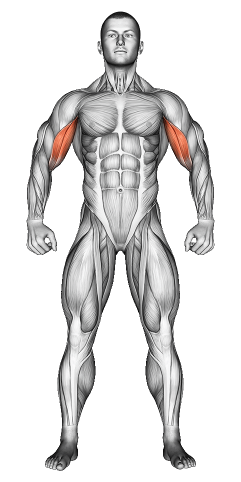
Secondary Muscles Group

Cable V Bar Curl: Step-by-Step Guide
- Step 1: Attach a V-bar handle to the low pulley on a cable machine. Stand with your feet shoulder-width apart, gripping the V-bar with an underhand (palms facing up) grip.
- Step 2: Keep your elbows close to your torso, and your back straight. Engage your core and let the V-bar hang down in front of you, with your arms fully extended.
- Step 3: Begin curling the V-bar up toward your chest by flexing your biceps. Keep your elbows stationary and focus on using only your arms to lift the weight.
- Step 4: Squeeze your biceps at the top of the movement, ensuring a strong contraction, then slowly lower the V-bar back down in a controlled manner to the starting position.
- Step 5: Repeat for the desired number of reps, maintaining control throughout the entire movement.
Cable V Bar Curl: Overview
The Cable V Bar Curl is a cable machine variation of the standard bicep curl, using a V-bar attachment. This exercise places continuous tension on the biceps throughout the range of motion, leading to better muscle engagement and growth. The V-bar attachment allows for a slightly more neutral grip compared to a straight bar, reducing wrist strain while focusing on the biceps.
This exercise is effective for building the biceps, especially the long head, contributing to a fuller, more developed arm. It’s a great addition to any arm workout routine, and it can be performed by lifters of all levels.
Cable V Bar Curls: Benefits
Cable V Bar Curls offer continuous tension on the biceps, unlike free weights, which lose tension at the top of the curl. This constant tension maximizes muscle activation and helps promote muscle growth and strength in the biceps.
Additionally, the V-bar grip reduces wrist strain, making this exercise a great option for those who experience discomfort during traditional barbell or dumbbell curls. It helps to improve both size and shape of the biceps while keeping the wrists in a more comfortable position.
Cable V Bar Curl: Pro Tips & Advanced Techniques
To get the most out of the Cable V Bar Curl, focus on slow and controlled reps. Avoid swinging your body or using momentum—this keeps the focus on your biceps. For an extra challenge, slow down the eccentric (lowering) phase to increase time under tension, or try a slight pause at the top of the movement to maximize the bicep contraction.
Cable V Bar Curls: Progression Plan
Beginner
Intermediate
Advanced
Cable V Bar Curls: Frequently Asked Questions (FAQs)
What muscles do Cable V Bar Curls target?
+Cable V Bar Curls primarily target the biceps, particularly the long head, but they also engage the forearms and brachialis to a lesser degree.
Are Cable V Bar Curls good for beginners?
+Yes, this exercise is suitable for beginners. The cable machine helps maintain constant tension on the muscles, and the V-bar provides a more comfortable grip for those new to weightlifting.
How often should I do Cable V Bar Curls?
+Cable V Bar Curls can be included in your arm workout 1-2 times per week. Be sure to allow adequate rest between sessions to avoid overtraining the biceps.
What common mistakes should I avoid?
+Avoid using momentum or leaning back to lift the weight. Keep your body still, elbows tucked, and focus on using your biceps to perform the curl.
Can I use different attachments for cable curls?
+Yes, you can switch between attachments like straight bars, rope handles, or EZ bars to target your biceps from different angles and add variety to your routine.