Broad Jump: Video Tutorial & Exercise Guide

| Workout | Broad Jump |
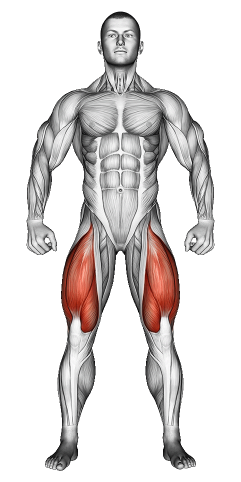
| Primary Muscle Group | Quads |
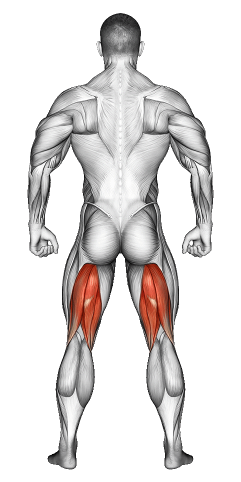
| Secondary Muscle Group | Hamstrings |
| Equipment Required | Bodyweight |
| Force Type | N/A |
| Mechanics | Compound |
| Exercise Type | Cardio/Strength |
| Difficulty | Intermediate |
Broad Jump: Video Tutorial & Exercise Guide
Secondary Muscles Group
Broad Jump: Step-by-Step Guide
- Step 1: Stand with your feet shoulder-width apart, toes pointing forward. Bend your knees slightly, and shift your weight to your heels. Keep your arms at your sides.
- Step 2: Swing your arms back and bend deeper at your knees, preparing to jump. Engage your core and keep your chest up.
- Step 3: Explosively push off the ground by extending your legs and swinging your arms forward. Jump as far forward as you can, aiming for both distance and height.
- Step 4: Land softly with both feet, bending your knees to absorb the impact. Ensure you land on your heels first and then the balls of your feet, maintaining balance.
- Step 5: Reset your stance and repeat for the desired number of reps, focusing on explosive power and maintaining control.
Broad Jump: Overview
The broad jump is a plyometric exercise designed to build lower body strength, power, and explosiveness. It involves jumping forward as far as possible from a standing position, using the force generated by your legs, core, and arms.
This dynamic movement targets the quadriceps, hamstrings, glutes, and calves, while also engaging your core for stability. Broad jumps are a great addition to athletic training programs as they improve jumping ability, running speed, and overall explosiveness.
Broad Jumps: Benefits
Broad jumps are an excellent way to develop explosive leg power, which is critical for sports that require quick bursts of speed and jumping ability, such as basketball, football, and track and field events.
This exercise also enhances your cardiovascular endurance, balance, and coordination, making it a great addition to high-intensity interval training (HIIT) or functional fitness routines. The broad jump also improves hip mobility and helps reinforce proper landing mechanics, reducing the risk of injury.
Additionally, broad jumps increase lower body strength, engaging muscles such as the quadriceps, hamstrings, glutes, and calves, while also activating the core for stability and control during the jump and landing phases.
Broad Jumps: Pro Tips & Advanced Techniques
Focus on the take-off and landing phases. Use your arms to generate momentum as you swing them forward during the jump. As you land, keep your knees slightly bent to absorb the impact and prevent injury. For an added challenge, try performing broad jumps over obstacles or into a box jump. Ready to power up your leg strength and explosiveness? Let’s jump!
Broad Jump: Progression Plan
Beginner
Intermediate
Advanced
Broad Jump: Frequently Asked Questions (FAQs)
What muscles do Broad Jumps target?
+Broad jumps primarily target the quadriceps, hamstrings, glutes, and calves. The core is also engaged for stability during the jump and landing phases.
Are Broad Jumps suitable for beginners?
+Yes, broad jumps can be performed by beginners, but it's important to start with shorter jumps to focus on technique and balance before progressing to longer distances.
How can I make Broad Jumps more challenging?
+To increase the difficulty, you can add obstacles to jump over, perform jumps into a box, or incorporate them into a plyometric circuit with other explosive exercises.
How often should I include Broad Jumps in my routine?
+Broad jumps can be included 1-2 times per week as part of a lower body or plyometric workout. Be sure to allow enough recovery time between sessions, as they can be demanding on the legs.
What common mistakes should I avoid when doing Broad Jumps?
+Avoid landing with straight legs, as this can lead to knee injuries. Always land softly with bent knees to absorb the impact. Additionally, ensure you use your arms to generate momentum for the jump rather than relying solely on your legs.