Dumbbell Rear Lunge: Video Tutorial & Exercise Guide

| Workout | Dumbbell Rear Lunge |
| Primary Muscle Group | Quads |
| Secondary Muscle Group | Calves, Hamstrings |
| Equipment Required | Dumbbell |
| Force Type | Push |
| Mechanics | Isolation |
| Exercise Type | Strength |
| Difficulty | Intermediate |
Dumbbell Rear Lunge: Video Tutorial & Exercise Guide
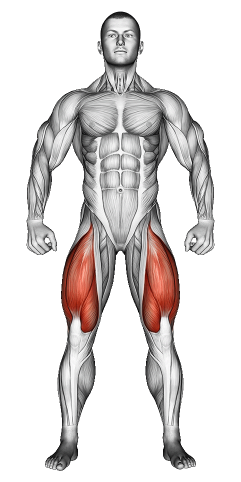
Secondary Muscles Group
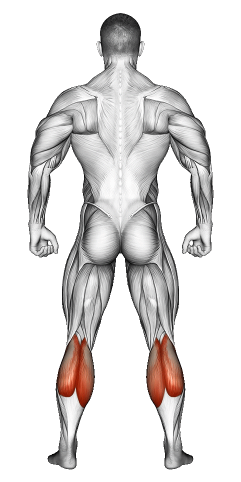
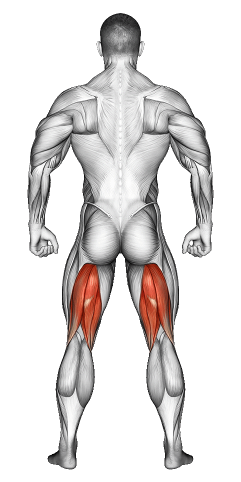
Dumbbell Rear Lunge: Step-by-Step Guide
- Step 1: Stand tall with your feet hip-width apart, holding a dumbbell in each hand by your sides. Keep your chest up and your shoulders back.
- Step 2: Step backward with your right leg, bending both knees to lower your body into a lunge. Your right knee should hover just above the ground, and your left thigh should be parallel to the floor. Keep your torso upright.
- Step 3: Push through the heel of your left foot to return to the starting position, bringing your right foot forward to stand tall again.
- Step 4: Repeat the movement with the left leg stepping backward, alternating legs with each rep.
- Step 5: Continue alternating legs for the desired number of repetitions, maintaining control throughout the entire movement.
Dumbbell Rear Lunge: Overview
The Dumbbell Rear Lunge is an excellent lower-body exercise that targets the quadriceps, hamstrings, glutes, and calves. By stepping backward, this variation of the lunge helps improve balance and stability while placing less strain on the knees compared to a forward lunge. The added resistance from the dumbbells increases the intensity, making it great for building strength and toning the lower body.
Suitable for all fitness levels, the Dumbbell Rear Lunge can be incorporated into leg-focused workouts or as part of a full-body routine. It’s an ideal exercise for anyone looking to enhance lower body strength and improve functional movement patterns.
Dumbbell Rear Lunges: Benefits
Dumbbell Rear Lunges are highly effective for building strength in the quadriceps, hamstrings, and glutes. The backward stepping motion engages your core and helps improve balance and coordination, while the addition of dumbbells increases resistance and muscular engagement.
This exercise also enhances flexibility in the hips and knees, promoting better functional movement. It’s particularly beneficial for reducing knee strain compared to forward lunges, making it a safer alternative for those with knee concerns.
Dumbbell Rear Lunge: Pro Tips & Advanced Techniques
Keep your chest up and core tight throughout the movement to maintain balance and prevent your torso from leaning forward. Focus on stepping back with control and pushing through the heel of the front foot to engage your glutes and quads effectively. For an added challenge, slow down the movement to increase time under tension or use heavier dumbbells to intensify the workout. You can also add a knee drive as you return to standing to work on balance and core stability.
Dumbbell Rear Lunges: Progression Plan
Beginner
Intermediate
Advanced
Dumbbell Rear Lunge: Frequently Asked Questions (FAQs)
What muscles do Dumbbell Rear Lunges target?
+Dumbbell Rear Lunges primarily target the quadriceps, hamstrings, and glutes. They also engage the calves, core, and lower back for stability and balance.
Are Dumbbell Rear Lunges suitable for beginners?
+Yes, this exercise is suitable for beginners. Start with bodyweight lunges to build strength and balance before incorporating dumbbells for added resistance.
How often should I perform Dumbbell Rear Lunges?
+Include Dumbbell Rear Lunges in your leg or full-body workouts 1-2 times per week, allowing for adequate recovery time between sessions for optimal muscle growth and strength development.
What common mistakes should I avoid?
+Avoid leaning too far forward or letting your front knee go beyond your toes. Keep your chest lifted, and ensure your front knee is tracking in line with your toes to prevent knee strain.
Can I increase the difficulty of Dumbbell Rear Lunges?
+Yes, you can increase the difficulty by using heavier dumbbells, slowing down the movement, or incorporating a knee drive as you return to standing for added core activation and balance training.