Dumbbell Tricep Kickback: Video Tutorial & Exercise Guide

| Workout | Dumbbell Tricep Kickback |
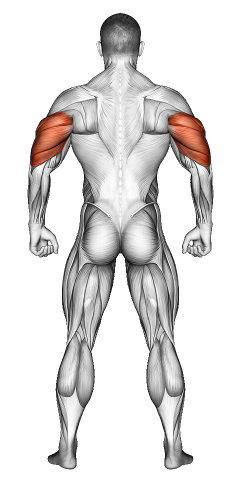
| Primary Muscle Group | Triceps |
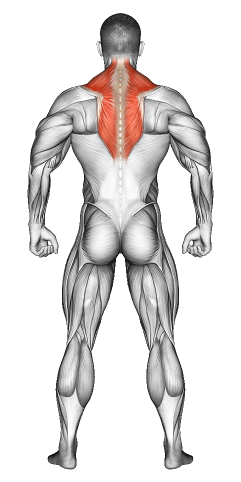
| Secondary Muscle Group | Shoulders |
| Equipment Required | Dumbbell |
| Force Type | Push |
| Mechanics | Isolation |
| Exercise Type | Strength |
| Difficulty | Intermediate |
Dumbbell Tricep Kickback: Video Tutorial & Exercise Guide
Secondary Muscles Group
Dumbbell Tricep Kickback: Step-by-Step Guide
- Step 1: Stand with your feet hip-width apart and hold a dumbbell in each hand. Hinge at your hips and slightly bend your knees, keeping your back straight and chest lifted. Your torso should be at a 45-degree angle to the floor.
- Step 2: Bend your elbows to a 90-degree angle, keeping your upper arms close to your torso. This is the starting position.
- Step 3: Keeping your upper arms stationary, extend your forearms behind you by straightening your elbows. Squeeze your triceps at the top of the movement.
- Step 4: Slowly bend your elbows to return to the starting position, maintaining control throughout the movement.
- Step 5: Repeat for the desired number of reps, keeping your upper arms stationary and focusing on isolating your triceps.
Dumbbell Tricep Kickback: Overview
The Dumbbell Tricep Kickback is an isolation exercise that primarily targets the triceps. This movement is effective for building strength and definition in the back of the arms. The exercise is performed in a bent-over position, which allows for a focused contraction of the triceps, minimizing the involvement of other muscles.
This exercise is suitable for all fitness levels and can be adjusted by using lighter or heavier dumbbells depending on your strength and goals. It’s commonly included in upper body and arm-focused workouts to help sculpt and strengthen the triceps.
Dumbbell Tricep Kickbacks: Benefits
Dumbbell Tricep Kickbacks are a highly effective way to isolate the triceps, helping to build stronger, more defined arms. By keeping the upper arms stationary, the movement focuses solely on the triceps, minimizing the involvement of other muscles. This makes it an excellent exercise for shaping and toning the back of the arms.
This exercise is also beneficial for improving upper body strength, enhancing pushing movements, and promoting muscle endurance in the triceps. It can easily be modified by adjusting the weight of the dumbbells or the range of motion to suit different fitness levels.
Dumbbell Tricep Kickback: Pro Tips & Advanced Techniques
Focus on keeping your upper arms completely stationary throughout the movement, as any movement in the upper arms will shift the focus away from the triceps. Avoid swinging the dumbbells and use a slow, controlled motion to fully engage the muscles. For added intensity, slow down the eccentric (lowering) phase of the movement or add a pause at the top to maximize tricep contraction. You can also perform the exercise one arm at a time to focus on each side individually.
Dumbbell Tricep Kickbacks: Progression Plan
Beginner
Intermediate
Advanced
Dumbbell Tricep Kickback: Frequently Asked Questions (FAQs)
What muscles do Dumbbell Tricep Kickbacks target?
+Dumbbell Tricep Kickbacks primarily target the triceps, which are located on the back of the upper arm. This exercise helps build strength and definition in the triceps.
Are Dumbbell Tricep Kickbacks suitable for beginners?
+Yes, this exercise is beginner-friendly. Start with light weights to ensure you can perform the movement with proper form, then gradually increase the weight as you build strength.
How often should I perform Dumbbell Tricep Kickbacks?
+Include this exercise in your upper body or arm workout routine 1-2 times per week, allowing your triceps to recover between sessions.
What common mistakes should I avoid?
+Avoid swinging the dumbbells or using momentum. Focus on keeping the upper arms stationary and using slow, controlled movements to isolate the triceps.
How can I make Dumbbell Tricep Kickbacks more challenging?
+To increase the difficulty, use heavier dumbbells, slow down the lowering phase of the movement, or add a pause at the top for maximum contraction and time under tension.